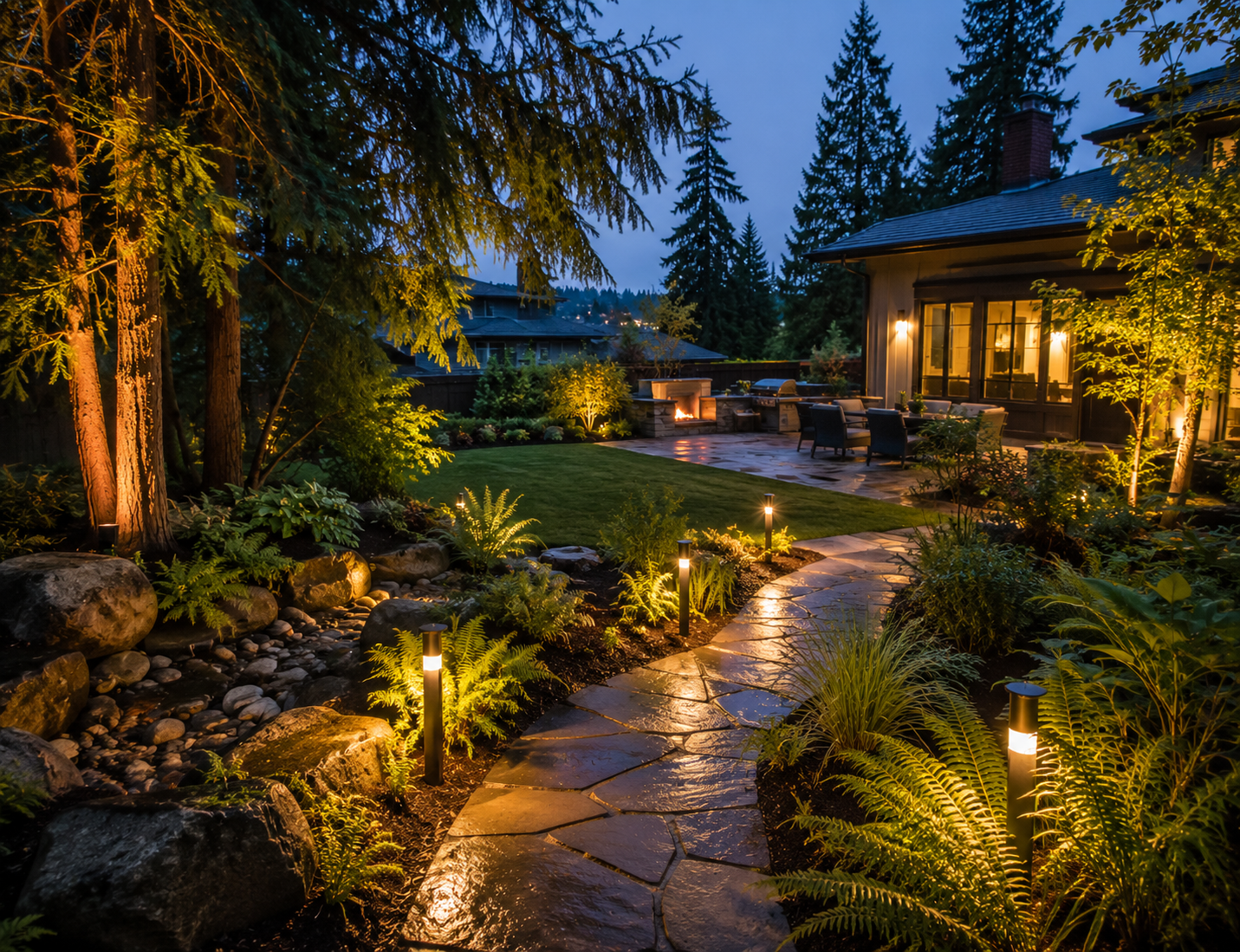
Backyard Drainage Problems in Seattle often become obvious during the long, wet winter months. Water may collect across the lawn, form muddy areas near a patio, flow down a sloped lot, or remain close to the foundation. Even a small drainage problem can eventually damage plants, weaken soil, create slippery surfaces, and make part of the yard difficult to use.
Seattle properties face a specific combination of challenges. Frequent winter rain keeps the ground wet for extended periods, while compacted or clay heavy soil can prevent water from soaking in quickly. Many homes are also built on sloped lots where runoff naturally travels toward the lowest part of the property.
A lasting solution begins with understanding where the water comes from and why it cannot leave the yard. Lake East Landscape provides Seattle landscaping services designed around local rainfall, soil conditions, and property layouts. A professional site evaluation can determine whether the right solution involves grading, a French drain, a rain garden, soil improvement, or a combination of several methods.
Why Seattle Backyards Develop Drainage Problems
Seattle receives much of its rain during fall and winter. While a healthy landscape can absorb regular rainfall, repeated storms may saturate the soil until it cannot accept more water.
Clay heavy soil contains very small particles that hold water and leave limited space for drainage. Compaction makes the problem worse. Construction activity, regular foot traffic, heavy equipment, and years of lawn use can press the soil together. Once this happens, water moves slowly through the ground and begins collecting on the surface.
The shape of the property is another important factor. Water always travels toward lower areas. On a sloped Seattle lot, runoff may move toward a patio, lawn, retaining wall, or home foundation. An uneven grade can also create shallow depressions where standing water remains long after the rain stops.
Roof downspouts, paved surfaces, and neighboring properties may add even more water. Seattle Public Utilities provides information about green stormwater infrastructure that can help property owners manage runoff more responsibly.
Signs Your Yard Has Poor Drainage
Not every drainage problem looks like a large puddle. Some develop slowly and may be mistaken for ordinary lawn or plant issues.
- Standing water that remains for several hours after rain
- Soft or muddy soil in frequently used areas
- Grass that becomes thin, yellow, or covered with moss
- Water flowing toward the foundation
- Soil washing away from a slope
- Mulch or gravel repeatedly moving out of place
- A patio or walkway that stays wet
- Water collecting behind a retaining wall
- Plants declining even though they receive enough care
These signs should not be ignored. Water that remains near a house can place pressure on foundation drainage. Saturated soil may also become unstable on a slope. If the problem affects a public drainage system or appears to come from outside the property, homeowners can consult King County drainage assistance for relevant local guidance.
Start With a Professional Drainage Evaluation
A drainage solution should never be selected based only on the location of a puddle. The visible water may be the final result of a problem that begins somewhere else in the yard.
A proper evaluation looks at the entire property. This includes the slope, soil type, downspout locations, paved surfaces, low areas, retaining walls, plant beds, and the direction water takes during rain. It may also involve checking how quickly the soil absorbs water.
Lake East Landscape includes drainage planning as part of its landscape design service. This allows the drainage system to work with the appearance and everyday use of the yard rather than feeling like a separate addition.
Once the source and path of the water are understood, the appropriate solution becomes much clearer.
Correct the Grade Around the Yard
Grading reshapes the ground so water flows toward a safe drainage point instead of collecting beside the home or in the middle of the lawn. It can be one of the most effective ways to correct Backyard Drainage Problems in Seattle when the property contains low spots or an improper slope.
The process may involve adding soil, removing excess soil, smoothing uneven areas, and creating a gradual path for runoff. The final grade must direct water without sending it onto a neighboring property or creating erosion elsewhere.
Grading is especially useful during a larger landscape renovation. Patios, lawns, planting areas, and pathways can all be planned around the corrected elevation. Lake East Landscape also handles grading and drainage preparation through its hardscape installation services.
Grading must be completed carefully on sloped lots. Moving water too quickly can wash away soil and create a new problem lower in the yard.
Install a French Drain for Subsurface Water
A French drain is a gravel filled trench containing a perforated drainage pipe. Water enters the trench, reaches the pipe, and is carried toward an appropriate discharge location.
French drains may be suitable for water moving through saturated soil or collecting along the lower edge of a slope. They can also help intercept water before it reaches a patio, lawn, or foundation area.
The placement and depth of the trench are critical. A drain installed in the wrong location may have little effect, while a poorly selected outlet can simply transfer the water problem to another part of the property.
The gravel and filter fabric also need to be installed correctly so soil does not clog the system. Because Seattle soil can contain a high percentage of fine clay particles, proper construction is essential for reliable performance.
Use a Rain Garden to Capture Runoff
A rain garden is a shallow landscaped area designed to receive and temporarily hold runoff. It uses suitable soil and plants to slow the water, filter it, and allow it to soak into the ground.
Rain gardens can be both functional and attractive. They are often used to manage water coming from a roof, driveway, or other hard surface. Washington State University explains that a proper rain garden includes a shallow basin, an appropriate soil mixture, and plants suited to changing moisture conditions.
Seattle Public Utilities and King County also operate RainWise in eligible areas. The program may help qualifying homeowners cover some or all of the cost of installing rain gardens or cisterns. Homeowners can review the RainWise rebate program before planning their project.
A rain garden must be placed where the soil, slope, and surrounding structures allow it to function safely. It should not be treated as a decorative planting bed that can be installed anywhere.
Improve Compacted or Clay Heavy Soil
When soil structure is poor, water cannot move through the ground efficiently. Adding suitable organic material can improve the structure of some soils over time, but the correct method depends on existing conditions.
Simply spreading a thin layer of new soil over compacted ground will rarely solve a serious problem. In some cases, the soil needs to be loosened, amended, or partially replaced. Drainage improvements may also be required beneath a new lawn or planting bed.
Plants should be selected according to the amount of moisture and sunlight present. Areas that remain naturally damp may benefit from plants adapted to wet soil, while other areas may need better drainage before planting begins.
This approach supports a healthier and more low maintenance landscape because the plants and soil are matched to Seattle’s actual climate.
Control Water on Sloped Seattle Lots
Sloped properties need more than a simple drain at the bottom of the hill. Water should be slowed, redirected, and managed before it gains enough force to remove soil.
Possible solutions include careful grading, drainage channels, planted areas, terracing, and retaining walls with appropriate drainage behind them. A retaining wall can stabilize soil and create usable space, but it must allow water pressure to escape.
Homeowners considering this option can read about Seattle retaining walls and the drainage requirements involved in building on a sloped yard.
Water moving across a steep or unstable slope may indicate a more serious condition. Professional evaluation is particularly important if the property shows cracking soil, leaning trees, soil movement, or erosion near a structure.
Why Quick Drainage Fixes Often Fail
Backyard Drainage Problems in Seattle are rarely solved by filling a puddle with topsoil or digging a shallow channel. These fixes may hide the symptoms briefly without changing the way water enters and moves across the property.
A successful drainage plan considers the entire system. The source of the runoff, soil absorption, property grade, outlet location, and surrounding structures must all work together.
Downspouts should not be redirected without confirming where the water will go. King County advises homeowners that roof drains and yard drainage may sometimes be redirected to suitable rain gardens or cisterns, depending on local conditions. Its rainy day guidance provides additional information about managing rain on private property.
Get Professional Help With Seattle Yard Drainage
Lake East Landscape has more than 25 years of experience designing and installing landscapes across the greater Seattle region. The team understands how wet winters, compacted soil, clay heavy ground, and sloped properties affect local yards.
A professional drainage plan can make the yard safer, protect landscape features, and create outdoor space that remains usable throughout the year. Depending on the property, the solution may include grading, a French drain, a rain garden, soil preparation, hardscape work, or coordinated landscape improvements.
If you are dealing with Backyard Drainage Problems in Seattle, visit the Lake East Landscape profile or contact the team to request an evaluation and free estimate.
Frequently Asked Questions
What causes Backyard Drainage Problems in Seattle?
The most common causes include frequent winter rain, compacted soil, clay heavy ground, low areas, improper grading, and runoff from roofs or paved surfaces. Sloped lots may also direct water toward lawns, patios, or foundations.
How do I stop water from pooling in my Seattle backyard?
The correct solution depends on the source of the water. Grading, French drains, rain gardens, soil improvement, and downspout management are common options. A site evaluation can identify which method is appropriate.
Will a French drain fix standing water in my yard?
A French drain can help when subsurface water or runoff needs to be intercepted and carried to a safe outlet. It may not solve the problem if the main cause is improper grading, blocked surface drainage, or unsuitable soil.
Are rain gardens good for Seattle yards?
Yes. Rain gardens are well suited to Seattle because they can capture runoff, filter water, and add plants to the landscape. The location, soil, size, and plant selection must be properly planned.
How much does backyard drainage work cost in Seattle?
The cost depends on the size of the affected area, access, soil conditions, excavation needs, and the selected solution. Minor grading will generally cost less than a complete system involving drains, retaining walls, and landscape restoration.
When should I call a professional for yard drainage?
Professional help is recommended when water remains near the foundation, erosion affects a slope, standing water returns after every storm, or previous drainage fixes have failed.