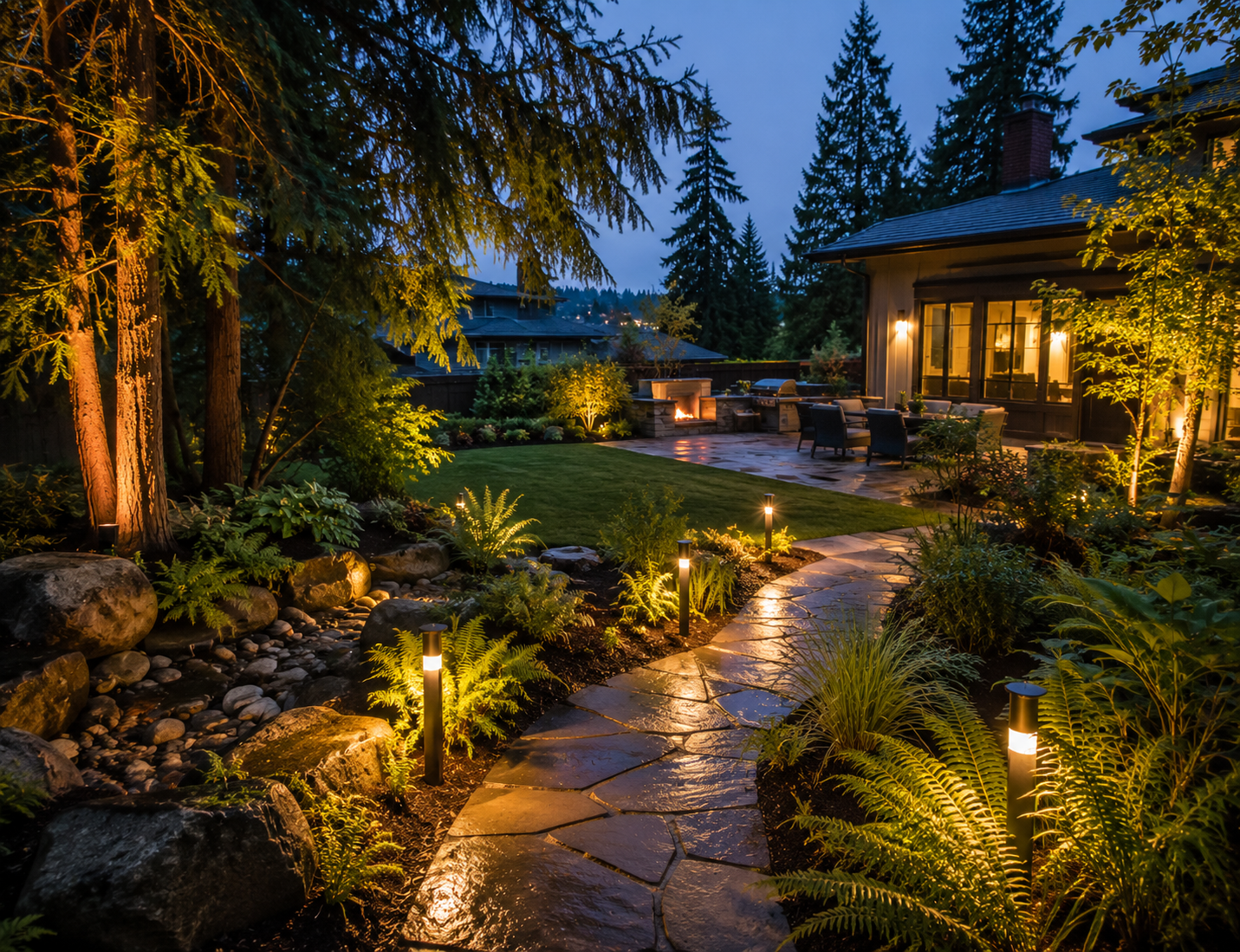

Nothing ruins a nice walk through the backyard quite like slipping on a moss covered path in the middle of January. Garden pathways for Seattle yards face a different set of challenges than pathways almost anywhere else, and choosing the wrong material or skipping proper drainage prep is how a lot of homeowners end up with exactly that slippery, muddy mess.
The Problem With Moss and Algae
Seattle’s near constant dampness through fall and winter creates ideal conditions for moss and algae to take hold on any shaded, slow drying surface. Smooth concrete and certain sealed pavers are particularly prone to this, since their tight surface holds a thin film of moisture that moss can colonize quickly. Once established, that green film becomes genuinely dangerous underfoot, especially on a sloped section of path or a set of outdoor steps.
Why Muddy Shortcuts Form in the First Place
Anywhere a formal path does not exist, foot traffic tends to carve its own route straight through the lawn, and that worn track becomes a muddy, compacted mess the moment the rainy season sets in. These shortcuts are usually a sign that a path was placed somewhere that does not match how people actually move through the yard, and adding a proper pathway along that natural route solves the mud problem far more effectively than trying to re-seed grass that keeps getting walked on.
Permeable Pavers for Better Drainage
For a path that needs to handle heavy rain without pooling, permeable pavers are one of the strongest options available. Unlike solid poured concrete, these pavers are installed with open joints filled with fine gravel, which lets water pass directly through the surface into a well draining base below rather than running off toward the house or collecting in low spots. The EPA’s guidance on permeable pavement highlights exactly this benefit for residential properties looking to manage stormwater on site rather than sending it straight into storm drains.
Gravel and Flagstone as Practical Alternatives
Gravel paths drain almost as well as permeable pavers and cost considerably less, making them a popular choice for informal garden paths that do not need to handle heavy daily traffic. Flagstone, especially when set with wide, gravel filled joints rather than tight mortar, offers similar drainage performance with a more polished, natural look that suits a front entry or a path connecting to a patio. Both materials also resist the slick moss buildup that smooth concrete tends to develop, since their irregular surface dries faster after rain.
Maintenance Through the Rainy Season
Even the best garden pathways for Seattle yards benefit from a bit of seasonal upkeep. A yearly power wash of paver or flagstone surfaces before the wettest months set in removes early moss growth before it gets a foothold, and topping off gravel paths every couple of years keeps them from thinning out in high traffic spots. This small maintenance routine goes a long way toward keeping a path safe and slip resistant through the winter.
What Goes Into a Proper Pathway Installation
A pathway built to hold up through a Pacific Northwest winter follows a specific process:
- Excavate below the frost line and grade for drainage
- Install a compacted gravel base to prevent shifting and pooling
- Add a weed barrier beneath the base layer
- Set the chosen material with adequate joint spacing for drainage
- Finish edges to keep material contained and prevent spreading
Lighting for Safer Nighttime Use
With Seattle’s short winter days, a lot of foot traffic on garden pathways for Seattle yards happens well after dark. Pairing a new path with low voltage path lighting improves both safety and curb appeal, marking edges and elevation changes that are easy to miss once the sun sets by mid afternoon. Planning lighting and pathway material together during design tends to produce a cleaner result than adding lights as an afterthought once the path is already finished.
Steps and Slopes Need Extra Planning
Sloped yards add another layer of complexity, since a path running up a grade change needs actual steps or a graded switchback rather than a straight run that becomes a water slide during heavy rain. Our hardscape installation team builds pathway steps with the same drainage principles as flat paths, using materials and spacing designed to shed water rather than trap it on each step’s surface.
Matching Materials to How You Use the Space
A path connecting the driveway to the front door sees very different use than a garden path winding through planting beds, and the right material often differs between the two. Our landscape design and installation team walks each property to understand traffic patterns before recommending a specific material, since a path built for the wrong kind of use tends to wear unevenly or fail to solve the original mud and moss problem.
Plan Your Pathway Project
Garden pathways for Seattle yards need to do more than look good in photos, they need to actually perform through our wettest months without becoming a hazard. The team at Lake East Landscape has built pathways and hardscapes across the Seattle region for more than 25 years, and we can recommend the right material and drainage plan for your specific yard. See recent projects on our Google Business Profile, then reach out for a free consultation.
Frequently Asked Questions
What is the best material for garden pathways in Seattle?
Permeable pavers, gravel, and flagstone with wide joints all drain well and resist moss buildup better than smooth poured concrete, making them strong choices for our wet climate.
How do I stop moss from growing on my garden path?
Choosing a material that dries quickly and drains well, along with occasional cleaning in shaded areas, significantly reduces moss buildup compared to smooth, slow drying surfaces.
Do permeable pavers actually help with drainage?
Yes, permeable pavers allow water to pass directly through the surface into a gravel base below, reducing pooling and runoff compared to solid, impermeable materials.
Can a garden pathway be added to a sloped yard?
Yes, sloped yards typically need built-in steps or a graded switchback design rather than a straight path, both planned with drainage in mind to prevent water from running down the surface.
How much do garden pathways cost in Seattle?
Cost depends on material choice, path length, and how much grading or drainage work the site needs. Gravel paths tend to cost less than flagstone or permeable pavers for the same length.