If you own a home in Seattle with a sloped backyard, you have likely watched what heavy rain does to it season after season. Soil shifts downhill, grass thins out in patches, and the grade changes slowly in ways that create real problems for your foundation, your lawn, and the usability of your outdoor space. Seattle sloped yard retaining walls are one of the most durable and lasting solutions for homeowners dealing with this challenge, but there is quite a bit to understand before you get started.
At Lake East Landscape, we have been designing and installing hardscape services including retaining walls across the greater Seattle area for over 25 years. This guide covers what causes slope problems in Seattle yards, how retaining walls solve them, what happened when we installed one for a local Seattle homeowner, and what the process looks like from start to finish.
Why Sloped Yards Are Such a Common Problem in Seattle
Seattle’s topography and climate create a combination that is genuinely difficult for any sloped yard to handle without proper intervention. The city sits on glacially shaped terrain with natural hills, bluffs, and grade changes throughout virtually every neighborhood from Beacon Hill to Magnolia to Northgate. Many Seattle homes were built on lots that include significant elevation changes in the backyard, the front yard, or both.
The rainfall makes the situation worse every year. Seattle averages around 38 inches of rain annually, much of it falling in sustained stretches from October through March. When that volume of water hits a sloped yard repeatedly over weeks and months, it saturates the soil and begins moving it downhill. Clay-heavy Pacific Northwest soils, which are common throughout King County, hold water poorly and shift when saturated. The result is erosion, slope creep, and in more serious situations the early signs of a landslide condition developing on the property.
Seattle sloped yard retaining walls address this problem structurally. Rather than trying to grow ground cover fast enough to hold soil in place or regrading a slope that will simply shift again in the next wet season, a properly built retaining wall holds the earth in position permanently and redirects water through drainage rather than allowing it to carry soil downhill with it.
How a Retaining Wall Prevented Backyard Erosion at a Seattle Property
One of the clearest examples of what Seattle sloped yard retaining walls accomplish came from a recent Lake East Landscape project at a residential property in Seattle. The homeowner had a sloped backyard that was actively eroding with each rainy season. Soil was migrating downhill during wet months, washing toward the lower portion of the yard, and creating an uneven, unusable space that had been getting worse with every passing year.
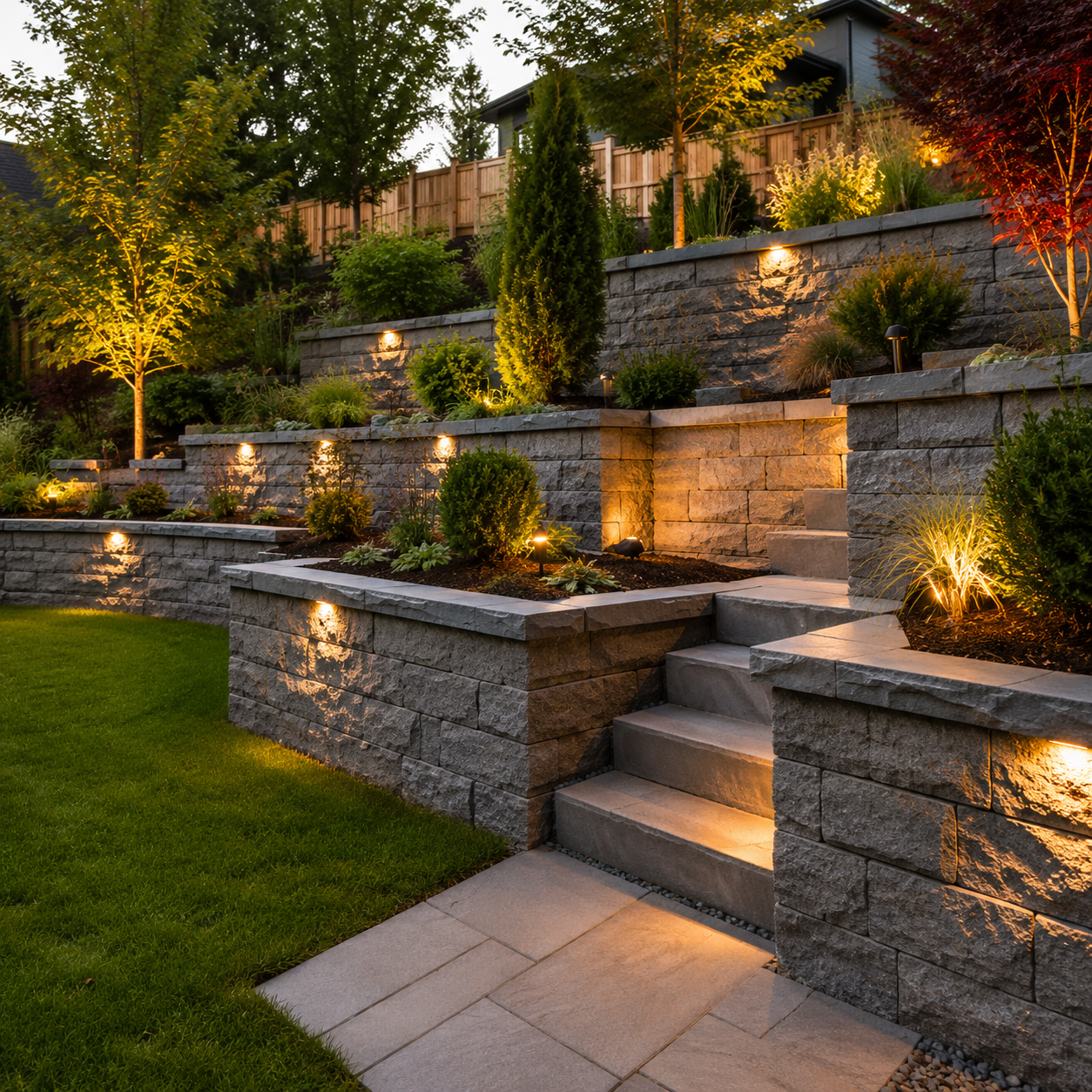
After an on-site assessment, our team designed and installed a tiered retaining wall system that held the slope firmly in place, redirected stormwater drainage away from the affected area, and created level, usable outdoor space where there had previously been nothing but an unstable and deteriorating grade. The erosion stopped completely. The backyard became functional. And the stability of the slope has held through multiple wet seasons since the project was completed.
This outcome is exactly what a well-designed retaining wall delivers when the drainage plan and material selection are done correctly from the beginning. It is not just about holding dirt in place. It is about solving a drainage problem, protecting the foundation of the home, and giving the homeowner outdoor space they can actually enjoy.
What to Consider Before Building a Retaining Wall in Seattle
Before any wall goes into the ground, there are several factors every Seattle homeowner should think through carefully. Getting these right at the planning stage separates a wall that holds for decades from one that shifts, cracks, or fails within a few years.
Drainage Behind the Wall Is Non-Negotiable
A retaining wall that does not account for drainage will fail. Water that cannot move through or around the wall builds up as hydrostatic pressure directly behind it, and that pressure is one of the most common causes of retaining wall failures anywhere in the country. In Seattle’s wet climate, proper drainage is not optional. It is the engineering detail that determines whether your wall performs reliably for 20 years or develops structural problems within five.
A correctly installed retaining wall includes gravel backfill directly behind the wall face, a perforated drain pipe at the base to carry water away, and drainage outlets that direct water to a safe discharge point away from both the wall and the foundation of your home. This is a step that should never be skipped.
Height Determines Structural and Permit Requirements
A retaining wall under four feet tall on a stable slope is a very different engineering challenge from a wall holding back a steep eight-foot grade change. Taller walls require deeper footings, more robust construction, and in some cases geogrid reinforcement behind the wall to distribute the load across the soil mass.
According to King County’s permit guidance, most retaining walls four feet high or less do not require a permit unless the property involves critical areas such as steep slopes, flood zones, or wetlands. Walls over four feet in height typically do require a permit, and properties on steep slopes may require review regardless of wall height. Working with a licensed contractor who understands these requirements is the clearest way to make sure your project is handled correctly.
Many sloped Seattle yards benefit from a tiered approach rather than a single tall wall. Breaking a large elevation change into two or three shorter walls with planting beds or usable areas between them distributes the load, reduces the pressure each individual wall must handle, and often creates a far more attractive and livable result than a single imposing structure would.
Material Choice Affects Both Performance and Appearance
The material you choose affects how the wall looks, how long it lasts, and how well it holds up to Seattle’s wet climate. The three most common options each have clear strengths.
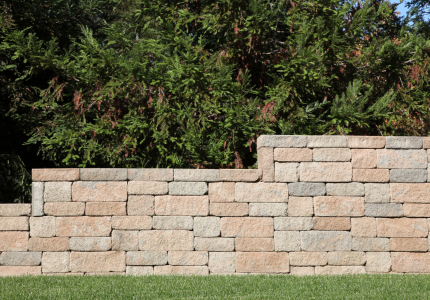
Concrete segmental block is the most widely used choice for residential retaining walls in the Seattle area. These units are modular, which allows for curves and tiered designs, they are engineered specifically for retaining applications, and they are available in textures and colors that complement Pacific Northwest landscapes naturally. They handle persistent moisture and seasonal temperature changes reliably.
Natural stone walls, whether dry-stacked or mortared, bring an organic and landscape-integrated look that works beautifully on properties with established gardens or naturalistic planting schemes. They require more skilled installation but reward that investment with a timeless appearance that ages well in Seattle’s climate.
Timber walls are occasionally used for smaller, lower-stakes applications but are generally not recommended for Seattle’s conditions. Wood retains moisture, which accelerates rot, and timber walls have a significantly shorter functional lifespan than stone or concrete alternatives in the Pacific Northwest environment.
Turning a Sloped Yard Into Usable Outdoor Space
One of the most rewarding outcomes of a well-designed Seattle sloped yard retaining wall project is the transformation of a previously unusable grade into real, livable outdoor space. This is where retaining walls connect directly to the broader goal of backyard landscape design across Washington.
A tiered retaining wall system can carve out flat areas for a patio, a garden bed, a lawn section, or an outdoor seating space. What was a sloping liability becomes a series of level terraces that dramatically expand how you actually live on your property. Combined with thoughtful landscape design, a retaining wall project can become the centerpiece of a full backyard transformation rather than simply a functional fix.
We work through the design and material selection process with every homeowner before any excavation begins. That conversation covers the slope grade, the soil conditions, any existing drainage concerns, how the wall fits into your long-term vision for the yard, and which materials best complement your home’s exterior and the surrounding landscape.
Our process for every Seattle sloped yard retaining wall installation follows a structured approach that ensures the finished project is built to last and performs the way it should through Seattle’s demanding wet seasons.
The process starts with an on-site consultation where we evaluate the slope, assess soil and drainage conditions, and discuss your goals for the space. We then develop a design and material plan and provide a clear written estimate. Once the project is approved, our crew handles all excavation and grading, installs the drainage system and gravel base, constructs the wall to specification, and backfills and compacts correctly to ensure long-term stability. We manage all applicable permit applications when they are required for your jurisdiction.
Our team is fully licensed, bonded, and insured for all hardscape work across King and Snohomish County. All of our work is backed by a warranty on both materials and workmanship, and we conduct a thorough final walkthrough with every homeowner before considering the project complete.
If your Seattle yard has a slope that is working against you, we are ready to help you turn it into something you are genuinely proud of. Call Lake East Landscape at (425) 244-5320 or visit our homepage to request your free estimate today.
Frequently Asked Questions: Seattle Sloped Yard Retaining Walls
Q1. Do I need a permit to build a retaining wall in Seattle?
It depends on the height and location of the wall. King County’s permitting guidance states that most retaining walls four feet high or less do not require a permit unless the property involves critical areas such as steep slopes, flood zones, or wetlands. Walls over four feet typically require a permit, and properties on steep slopes may require review regardless of wall height. Lake East Landscape handles all applicable permit requirements as part of our project process.
Q2. How do retaining walls prevent erosion in Seattle backyards?
Retaining walls physically hold soil in place on a slope, preventing it from migrating downhill during rain events. Combined with a proper drainage system behind the wall, they redirect water away from the slope rather than allowing it to saturate and carry soil downhill. This is especially important in Seattle where clay-heavy soils and high annual rainfall create persistent erosion conditions on sloped yards.
Q3. What is the best retaining wall material for Seattle’s climate?
Concrete segmental block is the most commonly recommended material for Seattle-area retaining walls because of its structural strength, design flexibility, and resistance to the moisture and seasonal temperature changes common in the Pacific Northwest. Natural stone is an excellent choice where aesthetics are the priority. Timber and railroad ties are generally not recommended due to accelerated rot in Seattle’s wet climate.
Q4. How long does a retaining wall last in Seattle?
A properly installed concrete block or natural stone retaining wall with adequate drainage can last several decades. The key factors are drainage design, proper base preparation, correct installation angle, and quality materials. Walls that fail prematurely almost always share one issue: inadequate drainage behind the wall that allowed hydrostatic pressure to build up over time.
Q5. Can a retaining wall turn my sloped Seattle yard into usable outdoor space?
Yes, and this is one of the most common motivations for retaining wall projects across Seattle. A tiered retaining wall system can create level areas for patios, garden beds, lawn sections, or outdoor living spaces on yards that were previously too sloped to use meaningfully. Lake East Landscape designs retaining wall systems with the full backyard vision in mind, not just the structural function.
Q6. How much does a retaining wall cost in Seattle?
Costs vary based on wall height, length, material selection, slope conditions, and whether permits are required. A concrete block wall for a straightforward residential application will cost less per linear foot than a mortared natural stone wall on a challenging slope with complex drainage needs. Lake East Landscape provides detailed written estimates after an on-site assessment so you know exactly what is included before any work begins.
Q7. Does Lake East Landscape serve areas outside of Seattle?
Yes. Lake East Landscape serves the greater Seattle region including Bellevue, Kirkland, Everett, Renton, Kent, Gig Harbor, Port Orchard, Poulsbo, and Bonney Lake across King, Snohomish, and Kitsap County. If you are unsure whether your location is within our service area, call us at (425) 244-5320 and we will confirm.